Brilliance & Quality: How Lab-Grown Diamonds Compare
If you put a lab-grown diamond and a natural diamond of equivalent quality side by side and asked a hundred people to identify which was which, you would get roughly fifty-fifty guesses. Not because people aren't paying attention — but because there is genuinely nothing visible to distinguish them.
The brilliance of a diamond — the way it returns white light to the eye — is a function of cut quality and refractive index. Lab-grown diamonds have the same refractive index as natural diamonds: 2.42. The same measure. Cut a lab-grown diamond to Ideal proportions and it will display the same breathtaking light performance as a natural Ideal-cut stone of the same grade. There is no optical difference that the human eye, or even a standard gemological loupe, can detect.
Hardness is equally matched. Diamonds rate 10 on the Mohs scale — the hardest naturally occurring mineral — and lab-grown diamonds achieve the same rating. This matters for an engagement ring worn daily: resistance to scratching, chipping, and surface wear are identical between the two.
The distinction that does exist is detectable only with specialist equipment used by trained gemologists. High-end laboratory instruments can identify trace differences in crystal growth patterns and the presence of certain inclusions specific to each production method. Short of sending your ring to a grading laboratory, neither you, your partner, nor anyone who admires the ring will ever know which type of diamond sits in the setting.
At Xennox Diamonds, we encourage every client considering the choice to view lab-grown and natural stones side by side in our showroom — same cut, same colour, same clarity grade — and make the decision with their own eyes. The comparison tends to be clarifying.
Ethical & Environmental Benefits
The ethical dimension of diamond sourcing is something more Brisbane couples are thinking carefully about, and it's a conversation we welcome.
Mining diamonds from the earth is not a neutral act. It involves significant land disruption, high energy consumption, and — despite the Kimberley Process, which aims to prevent conflict diamonds from entering the market — a supply chain that is difficult to trace with complete certainty from mine to setting. Conscientious buyers have every right to ask hard questions, and not every natural diamond seller has satisfying answers.
Lab-grown diamonds sidestep these concerns at the point of origin. They are created in controlled facilities — primarily using one of two methods: High Pressure High Temperature (HPHT), which replicates the geological conditions of natural diamond formation, or Chemical Vapour Deposition (CVD), which builds diamond crystals layer by layer from a carbon-rich gas. Neither method involves mining. Neither involves land clearing. Neither requires the displacement of communities or ecosystems.
The energy consumption of lab-grown diamond production is real and worth acknowledging. Growing a diamond in a laboratory requires significant electrical power. However, an increasing number of production facilities are powered by renewable energy, and even those using conventional power sources produce a fraction of the carbon and environmental impact of open-cut or underground mining.
For couples who place genuine weight on the environmental and ethical dimension of their purchase, lab-grown diamonds offer something that no amount of certification can fully guarantee for mined stones: a clean origin story, with no ambiguity.
At Xennox Diamonds, we are transparent about both the benefits and the limitations of lab-grown production. We source from facilities whose ethical and environmental standards we have verified, and we are happy to discuss those standards in detail during your consultation.

Certification & Trust
One of the most common misconceptions about lab-grown diamonds is that they are somehow less rigorously assessed than natural stones. The opposite is true.
Lab-grown diamonds are graded and certified by exactly the same international laboratories that assess natural diamonds — using exactly the same standards, the same equipment, and the same trained gemologists. At Xennox Diamonds, our lab-grown diamonds are certified by IGI (International Gemological Institute) and GIA (Gemological Institute of America), the two most widely recognised and respected grading authorities in the world.
A diamond certificate — whether for a lab-grown or natural stone — documents four key characteristics: cut grade, colour grade, clarity grade, and carat weight. It is an independent, third-party assessment of the stone's quality, produced by gemologists who have no financial interest in the sale. It is your verification that what you are buying matches what you are being told.
Every IGI and GIA certificate carries a unique report number. For many lab-grown diamonds, this number is also laser-inscribed on the stone's girdle — the narrow band around the widest point — and can be cross-referenced against the laboratory's online database by anyone at any time. You do not have to take our word for the quality of a stone we sell you. The independent verification exists precisely so you don't have to.
When you purchase a lab-grown diamond from Xennox Diamonds above 0.3ct, it comes with its grading certificate as a matter of course. We consider uncertified significant stones — natural or lab-grown — a red flag, and we don't sell them.
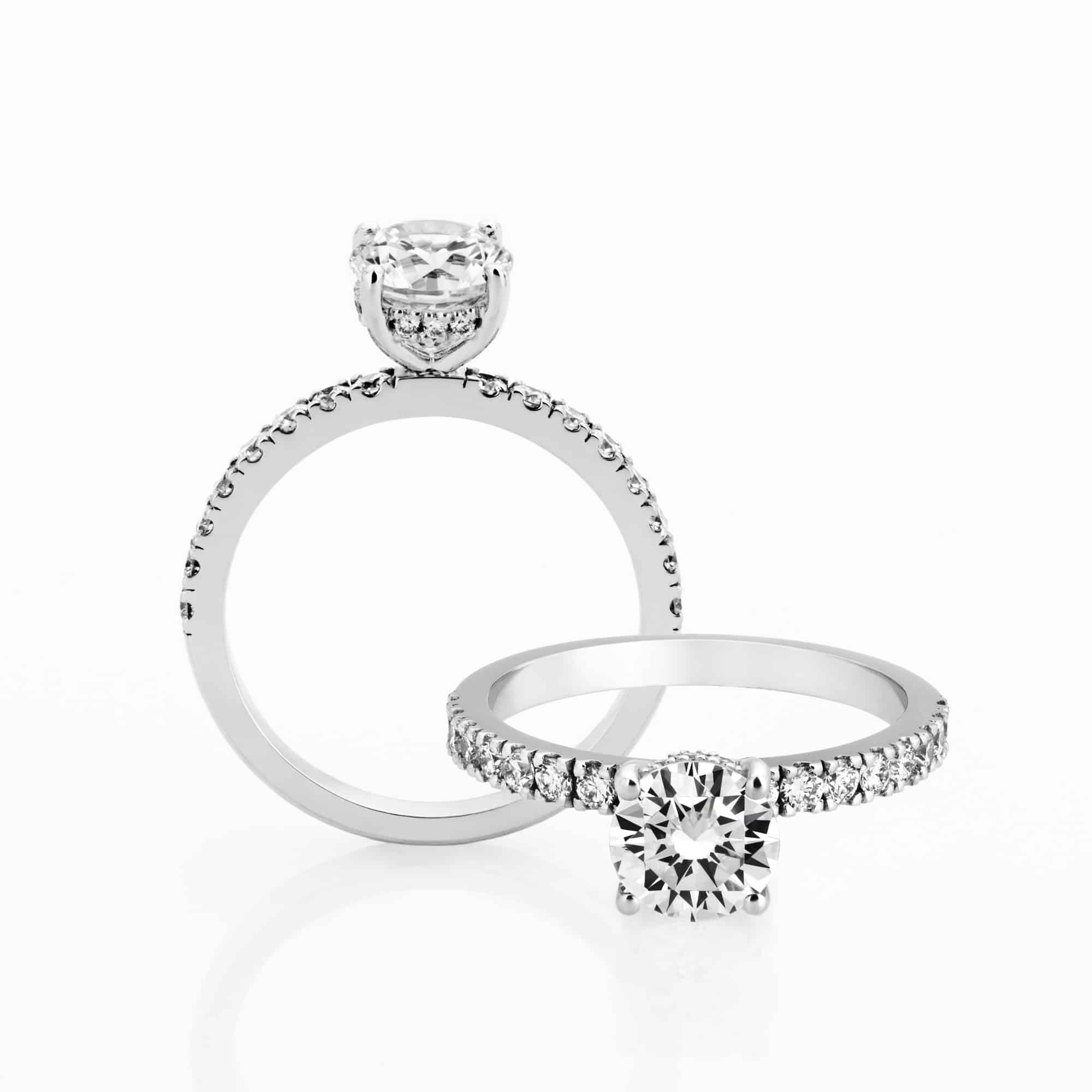
Choosing a Lab-Grown Diamond for Your Engagement Ring
The process of selecting a lab-grown diamond is identical to selecting a natural one — the same qualities matter, the same trade-offs apply, and the same knowledge helps you make a better decision.
Cut is the most important quality to prioritise, and the one most people underestimate. Cut determines how the diamond handles light — its brightness, fire, and scintillation. A poorly cut diamond of large carat weight and excellent colour will be outshone by a well-cut stone of more modest specifications. At Xennox Diamonds, we work primarily with Excellent and Ideal cut grades, and we recommend clients prioritise this above all else.
Colour in the G–H range offers the best value for most buyers. The GIA colour scale runs from D (perfectly colourless) to Z (visibly yellow). The difference between D and G is real but subtle — detectable by a trained eye under controlled lighting, but effectively invisible to most people in everyday conditions. For lab-grown diamonds, the price premium for D–F colour is smaller than for natural stones, which makes the higher grades more accessible. We'll help you find the right balance.
Clarity in the VS2–SI1 range is typically eye-clean. Inclusions at these grades are either very difficult or impossible to see with the naked eye. Paying for VVS or Flawless clarity in a lab-grown diamond is rarely necessary unless the stone is very large (above 2ct, where the table facet becomes wide enough for subtle inclusions to be detectable).
Carat weight and shape offer flexibility that surprises most buyers. Because lab-grown diamonds are more affordable per carat than natural stones, many clients find they can reach a size they assumed was out of budget. Fancy shapes — ovals, pears, cushions — also appear larger per carat than round brilliants, which is another useful way to maximise visual presence. Our designers will show you multiple options at your budget level so you can compare meaningfully.
Lab-grown diamonds are fully compatible with every setting style we offer — custom bespoke designs, semi-custom modifications, and all of our ready-to-wear ring styles including Vela, Ara, Lyra, and Orion. The stone sits in the setting exactly as a natural diamond would, because it is the same material.
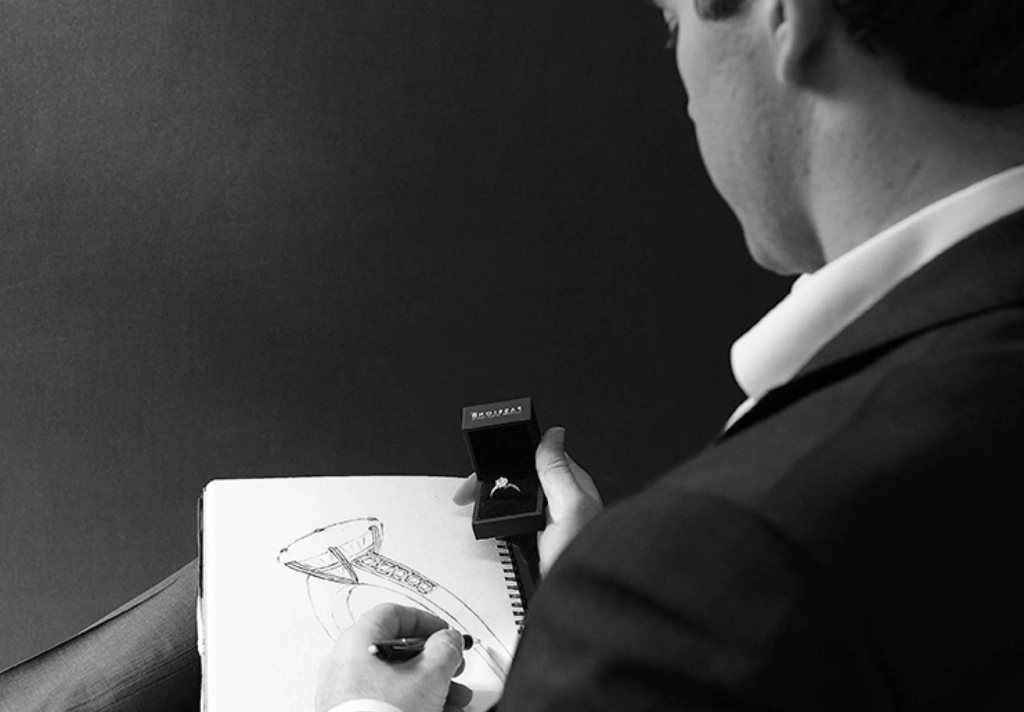
Our Lab-Grown Diamond Collection in Brisbane
At our Brisbane showroom, we carry a wide selection of certified lab-grown diamonds across cuts, sizes, and quality grades — available for viewing in person, which we strongly recommend before making any decision.
Our loose stone collection includes round brilliants from 0.5ct to 3ct and above, as well as oval, cushion, pear, emerald, and radiant cuts for clients who want something beyond the traditional round. We carry stones across the full quality spectrum, so whether your priority is maximising size on a tighter budget or achieving the highest possible grade in a given size, we have options to show you.
For clients who prefer a ready-to-wear ring, all of our signature designs — including Vela (our classic round brilliant solitaire), Ara (oval solitaire on a tapered band), Lyra (cushion halo), and Orion (three-stone with baguette accents) — are available set with lab-grown diamonds as well as natural stones. You can view both versions side by side in our showroom and make the comparison directly.
For custom commissions, lab-grown diamonds open up design possibilities that might otherwise be beyond budget. A client who comes in wanting a 2ct oval in a platinum pavé setting but is working within a $7,000–$9,000 budget will find lab-grown diamonds make that vision achievable. We work through the options with every client so the design and the stone choice can inform each other.
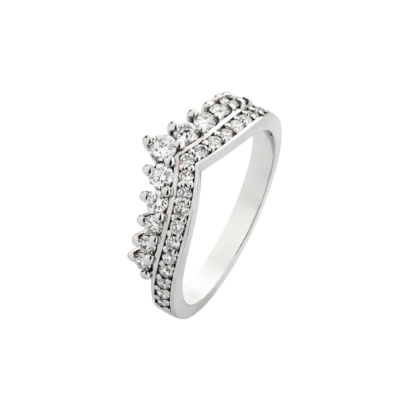
Why Brisbane Couples Choose Lab-Grown Diamonds
The decision is different for everyone, but here's what we consistently hear from Xennox clients who choose lab-grown.
Value that goes straight into the ring. A 30–50% reduction in stone cost means the same budget buys a meaningfully larger stone, a higher quality grade, a more complex setting, or simply a ring that cost less without looking it. For many couples, that difference is material.
Ethical clarity. Knowing that the stone in your ring came from a facility rather than a mine — that no land was cleared, no community displaced, no complex supply chain traversed — provides a kind of peace of mind that some buyers find genuinely important. For couples who think carefully about the provenance of what they buy, lab-grown removes ambiguity.
Identical quality, independently certified. Not a compromise, not an imitation. A real diamond, graded to the same standards, by the same institutions, using the same criteria. The certificate in the box says "diamond" because that's what it is.
The same ring they would have chosen anyway. This is perhaps the most telling thing: most clients who view lab-grown and natural stones side by side in our showroom and choose lab-grown do so not because they can't see the difference between the two types, but because they can't see any difference between them and don't find a reason to pay more for geological origin.
Xennox Diamonds is committed to giving every client the full picture — the benefits of lab-grown diamonds, the limitations (including resale value, which is lower than natural diamonds and declining as production costs fall), and the context to make a decision that is genuinely right for them. We don't push lab-grown because it's fashionable. We offer it because it's a legitimate, high-quality option that deserves to be understood.