1. Experience Bespoke Jewellery in Brisbane
Why Custom Rings Create a Unique Expression of Love
Off-the-shelf engagement rings are beautiful, but they're designed for everyone, which means they're designed for no one in particular. Custom engagement rings flip this equation: they're designed exclusively for you, incorporating elements that matter to your relationship. Maybe you met at a botanical garden and want floral motifs engraved on the band. Perhaps your partner loves Art Deco architecture and you want geometric patterns inspired by Brisbane's heritage buildings. Or you simply want a ring that fits her exact finger size, aesthetic preferences, and lifestyle needs without compromise.
The emotional value of a custom ring extends beyond its physical beauty. Knowing your partner invested time, thought, and creativity into designing something specifically for you adds profound meaning. Years later, you'll remember not just the proposal but the entire creative journey—choosing the diamond together, debating setting styles, seeing the first CAD render, and opening the finished box. These memories become part of your ring's story.
Custom rings also solve practical problems that ready-made rings can't address. You might need a specific ring size that standard inventory doesn't stock, want to incorporate a family diamond into a modern setting, require extra-durable construction for active hands, or desire a distinctive design that reflects your partner's unconventional style. Custom design accommodates all of this while ensuring the ring is structurally sound, properly proportioned, and professionally crafted.
The Design Process: From Concept to Creation
The custom engagement ring process follows a clear path, though timelines and specific steps vary by jeweller and design complexity. Here's what to expect when working with our Brisbane studio:
Initial Consultation (60-90 minutes): We begin by understanding your vision, budget, timeline, and preferences. Bring inspiration photos, sketches, or even Pinterest boards. We'll discuss diamond options (natural vs. lab-grown, shapes, quality grades), setting styles, metal choices, and any special requirements. This conversation is exploratory and pressure-free—we're gathering information to understand what resonates with you.
Design Development (1-2 weeks): Based on your consultation, we create preliminary sketches or CAD renders showing different design directions. This is your opportunity to refine the concept: adjust proportions, try different stone arrangements, modify details, or combine elements from multiple options. We collaborate iteratively until you love what you're seeing.
Diamond Selection (concurrent with design): If you haven't already chosen a diamond or gemstone, we'll source options matching your criteria. You'll view stones in person (or via detailed video for distance clients), comparing them in various lighting conditions. We provide complete certification and grading information for informed decisions.
Final CAD Rendering (1 week): Once the design is approved, we create a detailed 3D CAD render showing your ring from multiple angles. This digital model includes precise measurements, stone placements, and structural details. You'll see exactly how your finished ring will look, allowing final adjustments before fabrication begins.
Crafting and Setting (3-4 weeks): Our Brisbane workshop brings your design to life. We cast the metal, hand-finish all surfaces, set stones with expert precision, and apply your chosen finish (high polish, matte, hammered, etc.). Throughout fabrication, we perform quality checks ensuring structural integrity, proper proportions, and flawless execution.
Final Presentation: You'll receive your custom engagement ring in beautiful packaging, along with certification, care instructions, and detailed documentation of your ring's specifications. Many clients photograph or video this moment—opening a box containing something that didn't exist four weeks ago, designed specifically for the person you love.
Total timeline typically ranges from 4-8 weeks depending on design complexity and whether you're working with unique materials. Rush services are available for shorter timelines, though we never compromise quality for speed.
Personal Consultation: The Foundation of Great Design
The consultation is where exceptional custom rings begin. Unlike retail experiences where you choose from existing inventory, bespoke consultations are collaborative creative sessions. We ask questions: What is your partner's style—classic, modern, vintage, bohemian? What activities do they do (office work, hands-on profession, athletics, artistic pursuits)? What jewellery do they currently wear? What rings have they commented on positively or negatively? Do they prefer subtle elegance or statement pieces?
These details matter enormously. A surgeon needs a low-profile setting without snag points. A pianist might want a ring that doesn't interfere with hand positioning on keys. Someone who loves vintage fashion might gravitate toward milgrain detailing and Art Deco proportions, while a minimalist might want a sleek bezel setting with clean lines.
We also discuss practical considerations: budget (and how to maximize it), timeline (engagement date, seasonal factors, international travel), sizing challenges (surprise proposals vs. collaborative design), and any special requirements (ethical sourcing preferences, metal allergies, incorporating heirloom stones, matching wedding band compatibility).
The best consultations feel like conversations between friends who happen to be designing jewellery together. You should leave feeling excited about possibilities, confident in the process, and assured that your custom ring will be everything you envisioned—and perhaps a bit more.

2. Choosing the Perfect Diamond
Educating About Diamond Shapes, Sizes, and Certifications
The diamond you choose becomes your ring's centrepiece—its light performance, size, and shape define the entire design. Custom engagement rings allow you to prioritize exactly what matters to you rather than accepting compromises inherent in pre-made rings.
Each diamond shape has distinct personality and visual effects. The Round Brilliant offers maximum sparkle, timeless appeal, and works in everything from minimalist solitaires to elaborate halos—rounds command premium pricing but guarantee brilliant light performance. The Oval elongates fingers, appears larger than rounds of equal carat weight, and is excellent for custom designs where you want maximum visual impact per budget dollar—watch for bow-tie effects in lower-quality cuts. The Cushion is romantic and vintage-inspired, showing more coloured fire than white brilliance, and pairs beautifully with custom vintage-style settings featuring milgrain, engraving, or halo designs.
The Emerald cut is architectural and elegant, with step-cut facets creating a hall-of-mirrors effect—it requires higher clarity grades (VS1+) and is perfect for sophisticated, understated custom designs. The Princess cut is modern and geometric with second-best sparkle after rounds, though its sharp corners need protective four-prong settings. The Pear combines round brilliance with an elegant teardrop outline, excellent for asymmetric or vintage-inspired designs, and requires careful setting to protect the point.
The Marquise is bold and dramatic, maximizing finger coverage per carat with distinctive vintage character—ideal for statement designs or those incorporating Art Nouveau elements. The Radiant offers brilliant-cut faceting in a rectangular or square outline, forgiving on clarity and versatile in custom settings. The Asscher is a square step-cut with Art Deco elegance whose deep pavilion creates mesmerizing optical effects—it requires high clarity but is perfect for custom vintage-inspired designs.
Custom design allows you to select the exact shape matching your vision rather than choosing from limited inventory. You can also work with unusual shapes (hearts, triangles, shields, kites) or incorporate multiple shapes into unique designs—something impossible with mass-produced rings.
Diamond Sizes: Balancing Carat with Quality
Carat weight measures mass, not size, though they correlate. In custom design, you can optimize carat weight against other factors based on what your partner will notice and appreciate. A 0.90ct diamond might cost 20% less than 1.00ct despite looking identical when set. These subtle optimizations allow custom rings to maximize visual impact within budget.
Different shapes carry weight differently. A 1ct oval shows more surface area than a 1ct round, which shows more than a 1ct Asscher. Custom design accommodates these differences by adjusting setting proportions to complement the specific stone rather than forcing stones into one-size-fits-all settings.
Consider finger size in your carat decisions. A 1ct diamond on size 4 fingers appears significantly larger than the same stone on size 7 fingers. Custom design accounts for these proportions, ensuring your ring looks balanced and elegant rather than oversized or underwhelming.
Certifications: GIA, AGS, IGI Explained
Diamond certification provides independent verification of quality characteristics—critical for informed purchasing and insurance documentation. The three most respected laboratories are GIA, AGS, and IGI.
GIA (Gemological Institute of America) is the global gold standard, offering the most consistent, conservative grading. GIA certificates are universally recognized and provide the strongest resale value documentation. We strongly recommend GIA certification for all diamonds over 0.50ct or $2,000.
AGS (American Gem Society) is equally reputable, particularly for cut grading. AGS uses a 0-10 scale (0 = Ideal) rather than GIA's Excellent-Poor scale. Less common than GIA but fully reliable.
IGI (International Gemological Institute) is widely accepted, particularly for lab-grown diamonds. Some jewellers report IGI grades slightly more generously than GIA for colour and clarity, though differences are minor.
In custom engagement ring design, we source certified diamonds matching your specific criteria rather than hoping in-stock inventory has what you need. This means you get exactly the quality you want, certified by the laboratory you trust, at the carat weight fitting your budget.
Natural and Lab-Grown Diamond Options
Custom engagement rings can feature either natural or lab-grown diamonds—the choice depends on your priorities and values.
Natural Diamonds: Formed over billions of years deep in Earth's mantle, natural diamonds offer geological rarity, strong resale value, and the romance of deep time. Each natural diamond is genuinely unique—no two have identical inclusion patterns. Natural diamonds make excellent heirlooms as they maintain long-term value and cultural significance across generations. For custom rings, natural diamonds cost more per carat but offer better value retention. They're ideal if you view your engagement ring as both jewellery and investment, plan to pass it down through your family, or find meaning in the natural origin story.
Lab-Grown Diamonds: Chemically and optically identical to natural diamonds, grown in weeks rather than billions of years. Lab-grown diamonds cost 60-80% less than natural equivalents, allowing you to choose larger stones or higher quality grades within the same budget. For custom rings, lab-grown diamonds excel when maximizing size or quality is your priority. They're excellent for bold statement rings, elaborate multi-stone designs, or when budget constraints would otherwise limit your design possibilities. However, lab-grown diamonds have minimal resale value—consider them permanent jewellery rather than investments.
Which to Choose for Your Custom Ring?
Your decision should align with how you view the ring's purpose and meaning. Choose natural if you value rarity and authenticity, view the ring as an heirloom investment, want strong resale value, find meaning in natural geological processes, or prefer traditional symbolism. Choose lab-grown if you prioritize maximizing size and quality within budget, focus on appearance over origin, don't plan to resell, value technological innovation, or want to minimize upfront cost.
Many couples in Brisbane choose natural diamonds for centre stones (where size and quality matter most visually) and lab-grown for accent stones (where origin matters less but added sparkle matters more). This hybrid approach in custom design balances budget, ethics, and aesthetics intelligently.
Our studio offers complete transparency about both options—we source exceptional stones in both categories and never pressure clients toward either choice. Custom design is about creating your perfect ring, whether that features a billion-year-old natural diamond or a laboratory-grown stone with identical brilliance.
3. Selecting Your Ring Setting
Solitaire Settings: Timeless Simplicity
Solitaire settings—a single diamond elevated on a plain or minimally detailed band—represent classic engagement ring design. Their enduring popularity stems from how effectively they showcase the diamond's beauty without competing design elements.
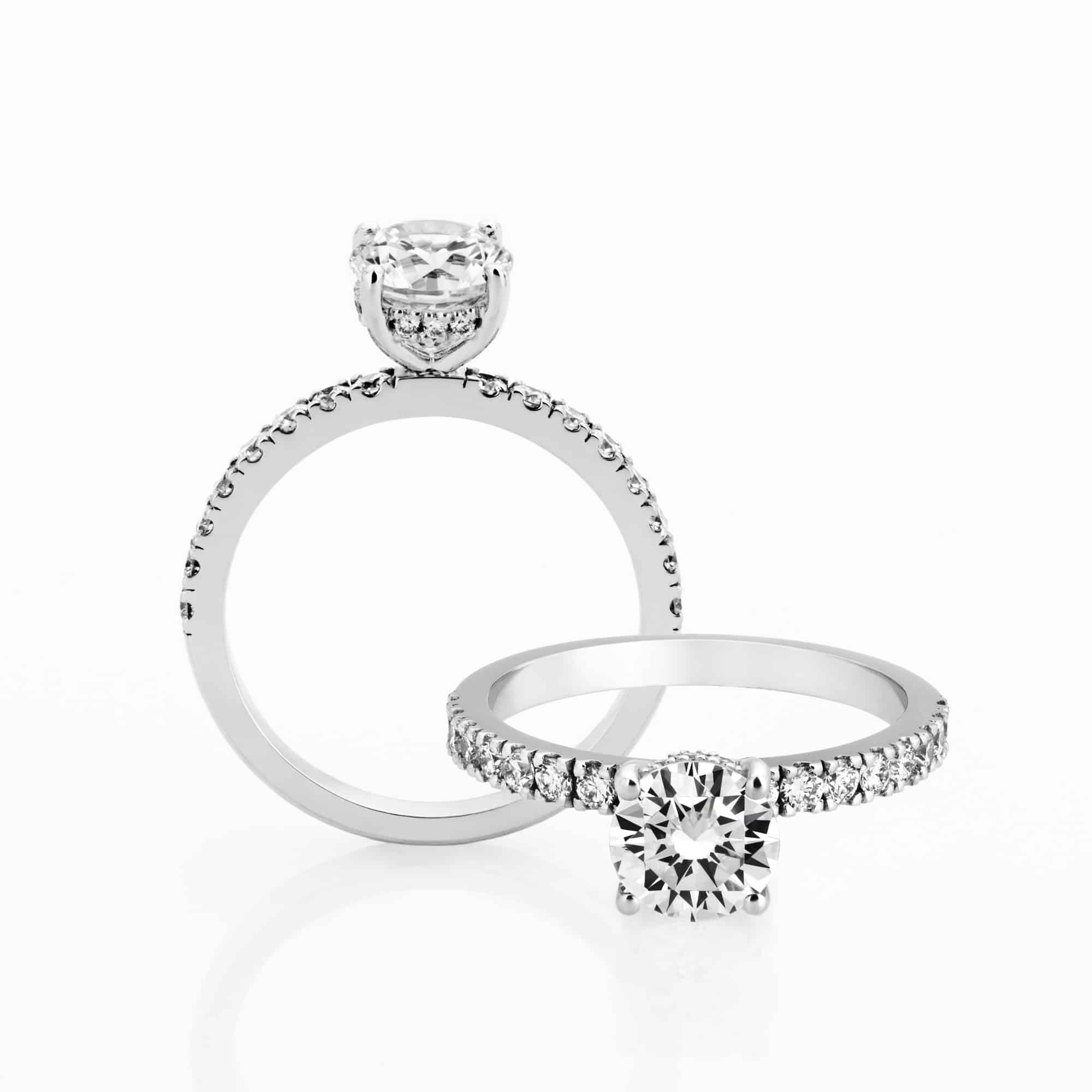
Claw/Prong Solitaires: Four or six prongs secure the diamond while allowing maximum light entry. Four-prong settings show more of the diamond's outline and create a modern, geometric look. Six-prong settings offer better security and create a rounder visual appearance. Prong height affects both aesthetics and practicality—high settings maximize brilliance but snag more easily; low settings sit close to the finger for active lifestyles.
Cathedral Solitaires: The band arches upward toward the centre stone like cathedral buttresses, creating elegant height while maintaining structural strength. Cathedral settings enhance the diamond's presence without additional stones or ornamentation.
Bezel Solitaires: A thin metal rim surrounds the diamond's girdle, creating sleek, modern protection. Full bezels offer maximum security; partial bezels balance protection with light entry. Bezel solitaires suit active lifestyles and contemporary aesthetics.
In custom design, solitaire settings can be refined beyond standard offerings: adjusted prong positioning for unusual diamond shapes, modified proportions for specific finger sizes, integrated details that maintain simplicity while adding subtle personality (engraving on prong bases, delicate metalwork on the band's interior, asymmetric prong placement for pear or marquise diamonds).
Halo Settings: Enhanced Brilliance and Size
Halo settings surround the centre diamond with a circle (or multiple circles) of smaller diamonds, creating two primary effects: the centre stone appears 0.25-0.50ct larger than its actual size, and the combined sparkle of centre plus halo diamonds produces exceptional brilliance.
Classic Halos feature a single ring of round brilliants surrounding the centre stone, working with all centre diamond shapes and creating immediate visual impact. Double/Triple Halos use multiple concentric rings of diamonds for a more dramatic, vintage-inspired look particularly popular with cushion and oval centre stones. Hidden Halos place diamonds on the basket underneath the centre stone—visible only from side views—adding sparkle without affecting the ring's face-up appearance. Cushion Halos use square or rectangular halos around round, oval, or cushion centre stones, creating geometric frames often combined with split shanks for elaborate designs.
Custom halo designs can incorporate fancy-shaped halo diamonds (marquise, pear, or baguettes instead of rounds), mix diamond sizes for graduating effects, use coloured gemstones in halos for unique contrast, or create asymmetric halos for artistic, unconventional rings.
Shoulder-Set and Accent Stone Settings
Shoulder-set rings feature diamonds or gemstones along the band's shoulders, creating sparkle that leads the eye toward the centre stone without overwhelming it.
Pavé Settings feature tiny diamonds set closely together with minimal visible metal, creating a paved appearance. French pavé uses small beads of metal between stones; micro-pavé uses the smallest possible diamonds. Beautiful and brilliant but requires regular maintenance as tiny prongs can wear.
Channel Settings place diamonds in a channel or groove within the band, creating a smooth, protected surface. More durable than pavé and ideal for active lifestyles, they work particularly well in platinum for a modern aesthetic.
Three-Stone Settings feature two smaller accent stones flanking the centre diamond, often symbolizing past, present, and future. Accent stones can match the centre shape or provide contrast (round centre with trapezoid sides, oval centre with pear sides).
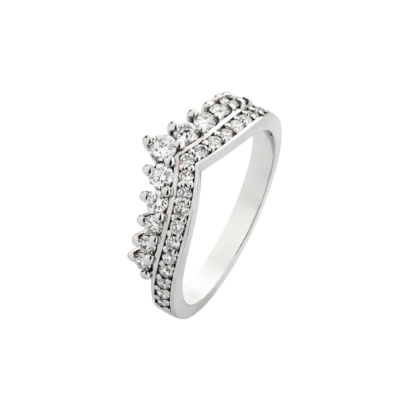
Split Shanks divide the band into two or more strands as it approaches the centre stone, creating visual interest and allowing pavé or channel-set diamonds on each strand—ranging from delicate and feminine to bold and architectural depending on execution.
In custom design, shoulder settings can extend partially or fully around the band, use graduating stone sizes for tapering effects, incorporate negative space for modern aesthetics, or combine multiple techniques for dimensional interest.
Unique Custom Settings: Beyond Traditional Categories
Custom design's greatest advantage is creating settings that don't fit standard categories—rings that reflect your specific vision rather than jewellery industry conventions.
Nature-Inspired Settings feature organic flowing lines, floral motifs, leaf patterns, vine details, or twig-textured bands—romantic designs that work beautifully with ethical sourcing values and outdoor wedding themes. Geometric/Architectural Settings use Art Deco step patterns, hexagonal arrangements, architectural frameworks, and negative space design, appealing to those who appreciate structure, symmetry, and modern sophistication.
Vintage Revival Settings authentically reproduce Edwardian, Victorian, or Art Nouveau designs using period-appropriate techniques—milgrain edging, hand engraving, filigree work, and collet settings. Asymmetric Designs feature intentionally unbalanced compositions, offset centre stones, and irregular stone arrangements—bold, artistic, and perfect for unconventional personalities.
Mixed-Metal Settings combine white gold, yellow gold, and rose gold in single designs, creating visual interest through metal colour choices alone. Tension Settings suspend the diamond between two ends of the metal band using metal tension—modern, striking, and unforgettable when executed by expert hands.
Custom engagement rings can also incorporate meaningful elements invisible in standard designs: compass points engraved on the band's interior showing where you met, coordinates of your proposal location, favourite quotes in hidden places, birthstones set on the band's interior, or puzzle-piece elements that interlock with the wedding band in unique ways.
4. Metals and Finishes
Metal Options: White Gold, Yellow Gold, Rose Gold, Platinum
Metal choice affects your ring's appearance, durability, maintenance requirements, and cost. Custom design allows you to select the metal best suited to your lifestyle and aesthetic rather than accepting whatever metal pre-made rings offer.
White Gold (14K or 18K): White gold is yellow gold alloyed with white metals then rhodium-plated for a bright white finish. It's the most popular engagement ring metal in Brisbane, offering a white-metal appearance at lower cost than platinum. It has good durability (14K is harder and more scratch-resistant than 18K), requires rhodium re-plating every 12-24 months, and is best for those wanting a white-metal aesthetic on a budget or for modern designs.
Yellow Gold (14K or 18K): Pure gold is naturally yellow; 14K and 18K yellow gold maintain rich gold colour while adding strength through copper and silver alloys. It requires minimal maintenance with no plating needed, and is best for vintage aesthetics, warm skin tones, traditional preferences, and low-maintenance lifestyles.
Rose Gold (14K or 18K): Rose gold gains its pink hue from higher copper content in the alloy, giving it the best durability of all gold types. It requires minimal maintenance, develops a subtle patina over time, and is best for romantic aesthetics and skin tones that suit warm metals.
Platinum (950 or 900): Platinum is naturally white, denser, and more durable than gold—the premium choice for engagement rings. It never needs plating, develops a beautiful patina over time, and costs typically 40-60% more than 18K gold. It's best for heirloom pieces, highly active lifestyles, maximum durability, and those with metal allergies.
In custom engagement rings, metal choice should align with your budget, aesthetic preference, durability needs, and maintenance willingness. If you won't re-plate white gold regularly, choose platinum instead.
Custom Finishes: Texture and Detail
Beyond metal colour, finish dramatically affects your ring's character. Custom design allows you to specify finish types often unavailable in retail inventory.
High Polish delivers a mirror-like reflective finish—classic, formal, and ideal for traditional designs. It shows scratches more readily but can be re-polished. Matte/Satin creates a soft, non-reflective surface that is modern, sophisticated, and shows fewer scratches—popular for contemporary engagement ring designs.
Brushed finish uses directional wire brushing to create subtle linear patterns, more casual than high polish and working beautifully in mixed-finish designs. Hammered finish features deliberate hammer marks with an organic, artisanal character—excellent for nature-inspired designs and very forgiving of wear, as new scratches blend into existing texture.
Florentine finish uses an engraved crosshatch pattern creating an antique, handcrafted appearance with strongly vintage character, primarily used in Art Deco and Edwardian revival pieces. Milgrain adds tiny bead-like edging along metal borders—a classic vintage detail from the early 20th century that adds delicate texture and Old-World craftsmanship feel, often combined with engraving.
Mixed Finishes combine multiple finishes on one ring—polished band with matte setting, hammered shank with polished prongs, brushed band with high-polish milgrain edges—creating visual depth impossible in mass-produced rings.
Finish should complement your design's overall character. Vintage-inspired designs benefit from matte finishes, milgrain, and engraving. Modern minimalist designs suit high polish or brushed finishes. Nature-inspired rings work beautifully with hammered or organic textures. Your jeweller can show you finish samples and discuss how different surfaces will wear over decades.
5. Visualizing Your Design
CAD Renders, Sketches, and 3D Previews
One of custom engagement ring design's greatest advantages is seeing your ring before it exists. Modern visualization technologies eliminate guesswork and ensure you're confident before fabrication begins.
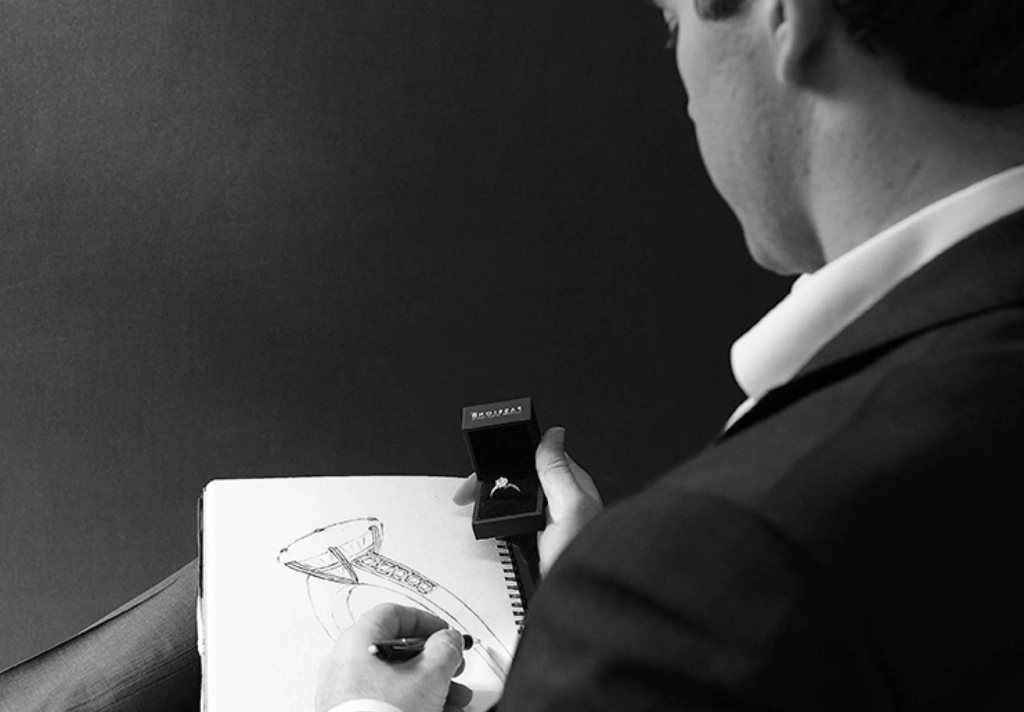
Initial Sketches: Traditional hand sketches provide quick exploration of design concepts. During consultations, jewellers often sketch ideas in real-time as you discuss preferences—rough proportions, stone arrangements, profile views. These preliminary sketches aren't final designs but visual conversation tools helping articulate ideas that words struggle to capture. Sketches excel for exploring broad directions quickly, allowing rapid iteration without the time investment of detailed CAD modeling.
CAD (Computer-Aided Design) Renders: Once your design direction is established, detailed CAD modeling creates photorealistic 3D visualizations showing your ring from every angle. CAD renders display precise proportions and measurements, exact stone sizes and arrangements, metal volume and weight estimates, profile views showing how the ring sits on the finger, detail shots of engraving and texture work, and how the engagement ring aligns with a wedding band. CAD technology allows experimenting with variations risk-free, ensuring your final decision is fully informed.
The renders you receive typically include multiple angle views (top, side, three-quarter perspective), close-ups of specific details, comparison images if you're choosing between options, and measurement annotations confirming all specifications.
3D Printed Models (Optional): Some studios offer 3D-printed resin models—physical prototypes you can hold, try on, and examine in person. These tangible models help assess proportions and how the ring feels in your hand, and are particularly valuable for unusual designs where visualizing scale from renders is challenging.
The Revision Process: CAD visualization is an iterative process. You review renders, request adjustments, and view updated versions until the design is exactly right. Common revisions include adjusting band width, modifying setting height, tweaking prong placement, refining engraving details, or adjusting proportions for better balance. Good jewellers welcome this iteration—it's how great custom rings are born. You should never feel pressured to approve a design before you're completely satisfied.
Seeing the Final Ring Before It's Made
The confidence that comes from CAD visualization cannot be overstated. You know exactly what you're getting—no surprises, no disappointment, no "I wish we had done it differently." This assurance is particularly valuable for surprise proposals where you can't involve your partner in design decisions. Seeing detailed renders before fabrication means you can confidently propose knowing the ring perfectly matches your vision.
CAD files also serve as permanent documentation of your ring's design—valuable for insurance, future repairs, or creating matching wedding bands years later.
6. Crafting the Ring
Handcrafting Process in Our Brisbane Workshop
Once your design is finalized, the transformation from digital file to physical ring begins. Our Brisbane workshop combines traditional goldsmithing techniques with modern technology, ensuring each custom engagement ring meets exacting standards for beauty, durability, and precision.
Step 1: Casting (1-2 days). Your approved CAD file generates a 3D-printed wax model. This wax model is encased in investment plaster, then burned out in a kiln, leaving a perfect negative mold. Molten metal is cast into this mold using centrifugal or vacuum casting. Once cooled, the rough casting emerges—recognizably your ring but requiring substantial refinement.
Step 2: Metal Finishing (2-3 days). The raw casting undergoes extensive hand-finishing. We file away excess metal, smooth all surfaces, define crisp edges and details, and ensure consistent thickness throughout the band. For intricate designs with engraving or milgrain, artisans use specialized gravers, burins, and milgrain wheels to create hand-applied details.
Step 3: Pre-Polish (1 day). Before stone setting, the ring is meticulously polished using progressively finer abrasives. This preparation ensures the finished ring will achieve perfect polish after stone setting, when access to some areas becomes restricted.
Step 4: Stone Setting (2-3 days). Expert stone setters secure your diamond(s) with microscopic precision. For prong settings, setters trim and shape each prong, position the stone perfectly level, and burnish prongs over the diamond's girdle. Pavé, channel, and bezel settings require specialized tools and techniques specific to each style. Stone setting is where craftsmanship is most critical—our setters have decades of experience ensuring stones are secure, perfectly level, and positioned for optimal light performance.
Step 5: Final Polish and Finish (1-2 days). After setting, the ring receives its final polish or specified finish. For high-polish finishes, we use progressively finer polishing compounds until the metal achieves mirror-like reflection. For textured finishes, hammering, brushing, or engraving is applied after final polish to ensure details remain crisp and intentional.
Step 6: Quality Control. Before your ring leaves our workshop, it undergoes rigorous inspection covering stone security, structural integrity, finish quality, detail accuracy, and sizing verification. If any element fails inspection, the ring returns for correction. We don't compromise on quality—your custom engagement ring must be perfect.
Quality Checks and Finishing Touches
Beyond technical construction, we attend to final details that elevate custom rings from good to exceptional. The band's interior receives smooth polish for comfortable wear, with sharp edges rounded to ensure the ring never catches or irritates.
Our studio's maker's mark is discreetly stamped inside the band, along with metal purity marks (14K, 18K, 950 for platinum) as required by standards.
If you've discussed eventual wedding band pairing, we ensure the engagement ring's profile accommodates your intended wedding band style—whether that's a flush-fitting straight band, contoured band following the engagement ring's curves, or stacked design with intentional gap.
For white gold, we apply fresh rhodium plating as the final step, ensuring brilliant white appearance. Some clients request E-coating for enhanced durability, particularly for active lifestyles. We also photograph your completed ring from multiple angles, creating records for your files and insurance documentation.
7. Your Unique Engagement Ring
The Custom Experience: Timeline, Care, and Perfection
The journey from first consultation to finished ring typically spans 4-8 weeks, though timelines vary based on design complexity and material availability.
Weeks 1-2: Initial consultation, design development, diamond sourcing. You'll leave your consultation with preliminary direction, then receive sketches or initial CAD renders for feedback.
Weeks 2-3: Design refinement and finalization. Iterative adjustments to CAD renders until you approve the final design. Diamond selection and confirmation of specifications.
Weeks 3-6: Fabrication period. Your ring is cast, finished, set, and polished in our Brisbane workshop. During this time, we send progress updates and status confirmations.
Week 6-8: Quality control, final touches, and delivery preparation. Your ring is inspected, photographed, packaged, and prepared for pickup or shipping.
For clients needing faster turnaround, rush services can sometimes compress timelines to 2-3 weeks, though we always maintain quality standards even under time pressure.
Care for Your Custom Engagement Ring
Your custom ring deserves care matching the craftsmanship invested in its creation.
Daily Wear: Remove your ring before activities exposing it to harsh chemicals (household cleaners, chlorine), hard impacts (weightlifting, rock climbing), or abrasive materials (gardening, construction work). Apply lotions and perfumes before wearing your ring, as these products create buildup dulling sparkle.
Home Cleaning: Weekly cleaning maintains brilliance. Use warm water with mild dish soap, soak for 20-30 minutes, gently brush with a soft toothbrush (especially under the diamond and around prongs), rinse thoroughly, and dry with a lint-free cloth. Avoid harsh chemicals and abrasive materials.
Professional Maintenance: Every 6 months, have your ring professionally cleaned and inspected. Our studio provides complimentary cleaning and inspection for life—we check prong integrity, setting security, and structural condition, catching potential problems before they become serious.
Insurance: Schedule your custom ring on your homeowner's or renter's insurance policy, or purchase separate jewellery insurance. Professional appraisal documents replacement value for insurance purposes—update appraisals every 3-5 years as diamond values fluctuate.
Storage: Store separately from other jewellery in a fabric-lined box or individual pouch. Diamonds can scratch other gemstones and even other diamonds, so separation protects all your jewellery.
The Assurance of Perfection
Custom engagement rings from reputable Brisbane studios come with guarantees and services providing peace of mind.
Sizing Guarantee: Most jewellers offer one complimentary resizing within the first year if the initial size needs adjustment. Additional sizing services are available at reasonable cost throughout your ring's lifetime.
Workmanship Warranty: We stand behind our craftsmanship with warranties covering manufacturing defects, structural issues, and stone loss due to setting failure (excluding damage from external impacts). Typical warranties range 1-3 years for workmanship, with lifetime commitments for repairs to our own work.
Modification Services: Life changes, and rings can change with you. Years later, you might want to upgrade the centre diamond, add more accent stones, convert to a different metal, or modify details while maintaining the ring's core character. Custom studios that created your original design can execute these modifications seamlessly.
Heirloom Potential: Custom engagement rings, properly maintained, become family heirlooms. The combination of quality materials, expert craftsmanship, and personal meaning ensures your ring will be treasured for generations. We've reset great-grandmothers' original diamonds into great-granddaughters' custom designs—circles of love spanning a century.
Your custom engagement ring represents not just a purchase but a collaboration—a creative partnership producing something that didn't exist before, designed specifically for your unique love story. From first consultation through decades of wear, we're invested in your ring remaining as perfect as the day you first saw it.