Classic Solitaire Rings
There is a reason the solitaire has remained the most popular engagement ring style in Brisbane — and in virtually every jewellery market in the world — for more than a century. It is a design that reached its logical conclusion a long time ago and has had nowhere to improve upon since.
A solitaire ring is defined by one stone, one setting, one band. Nothing competes with the diamond. The design exists entirely to present the stone as beautifully and clearly as possible, and when the stone is excellent — which it should be in a solitaire, because there is nowhere to hide — the result is arresting.
The variations within the solitaire category are more significant than they might first appear. A four-claw setting holds the stone with minimal metal contact, showing as much of the diamond as possible and giving the ring a lighter, more contemporary feel. A six-claw setting offers greater security and a slightly more traditional look — it is the classic engagement ring silhouette, the shape that registers immediately as an engagement ring from across a room. A bezel setting, where the stone is enclosed by a continuous rim of metal, is sleek and modern and extremely practical for active lifestyles. A tension setting, where the stone appears to float between two compressed ends of the band with no visible support, is architectural and dramatic.
Band profiles matter too. A plain polished band is the purest expression of the solitaire. A slightly tapered band that narrows toward the setting makes the stone appear larger. A knife-edge band adds a geometric quality. A twisted or braided band introduces organic movement.
Our Vela ring — a round brilliant in a fine six-claw platinum or gold setting on a subtly tapered band — is our most consistently popular design. It is the solitaire done without compromise, and it looks extraordinary on virtually every hand.
For a solitaire to work at its best, the stone needs to be exceptional. Cut quality matters most of all — a well-cut solitaire is a different object entirely from a poorly cut one of identical specifications. We will always talk you through this in detail before you commit.

Halo & Shoulder-Set Designs
If the solitaire is about restraint, the halo is about abundance — and for many Brisbane couples, abundance is exactly right.
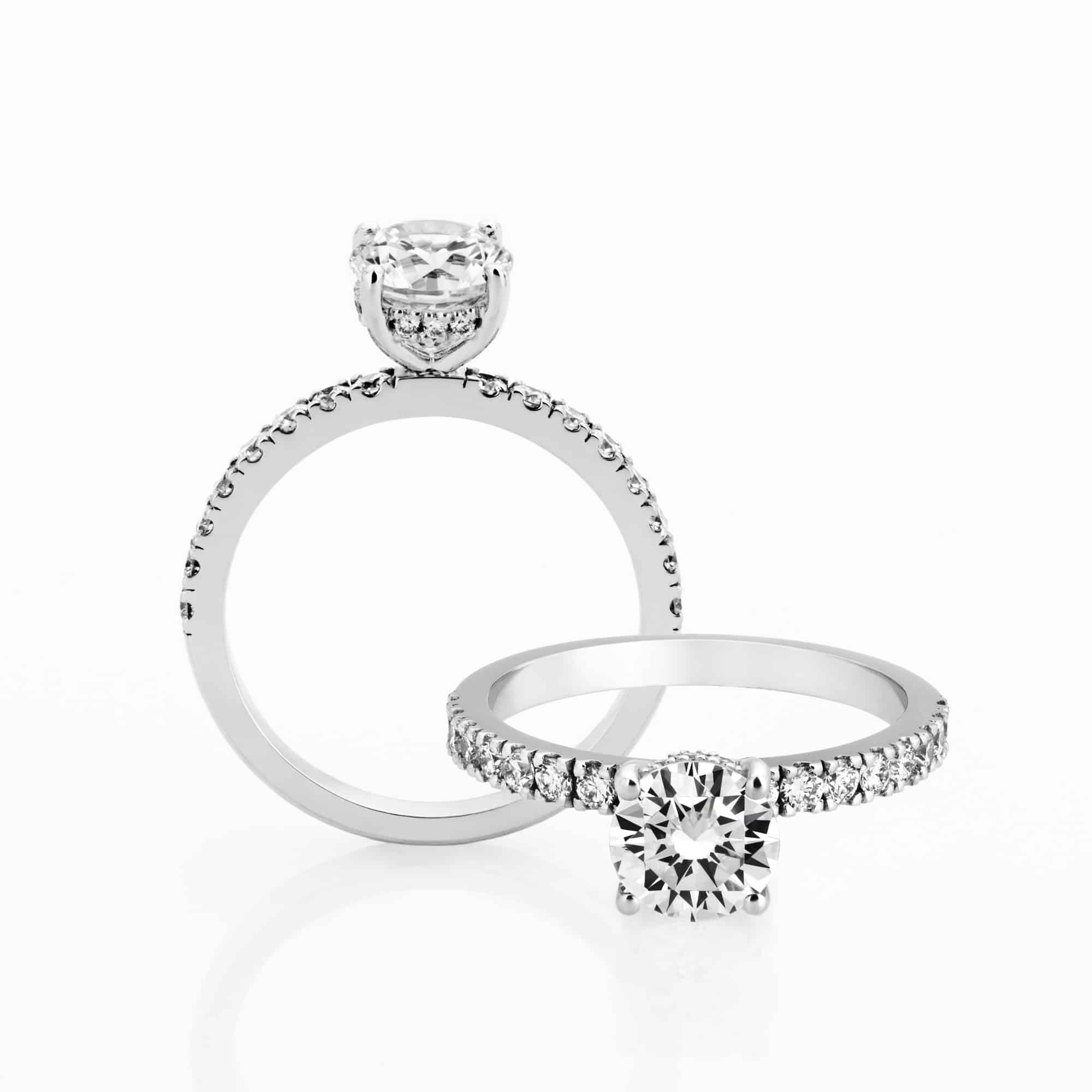
A halo setting surrounds the centre stone with a ring of smaller diamonds, typically round brilliants in a pavé or micro-pavé setting. The effect is to visually enlarge the centre stone, increase the overall brilliance of the ring, and add a layer of design complexity that solitaires deliberately avoid. A 1ct centre stone in a well-executed halo can appear to be closer to 1.5ct. The light output of the ring — the way it catches and returns light from multiple directions — is dramatically greater than a solitaire of the same centre stone specification.
Single halos are the classic version: one ring of diamonds around the centre stone. Double halos add a second, slightly larger ring, creating a more maximalist effect that is particularly striking with cushion-cut and round brilliant centres. Floating halos, where the centre stone appears elevated above the halo by a small gap, add architectural interest and are one of the more contemporary halo variations.
The shape of the halo matters. A round halo around a round brilliant is the traditional combination. A cushion-shaped halo around a round brilliant creates a softer, more vintage-feeling silhouette. A diamond-shaped halo around a princess or cushion cut gives the ring a more geometric, architectural quality.
Shoulder-set rings — sometimes called pavé or channel-set bands — extend the stone detail along the shoulders of the band rather than or in addition to surrounding the centre stone. Micro-pavé shoulders, where tiny diamonds are set closely along the band in a continuous line, add brilliance and visual length without adding the height of a full halo. French-cut settings, where the pavé stones are held by V-shaped beads, add more light entry and a slightly more intricate look.
Our Lyra design — a cushion-cut centre stone in a single round halo on a pavé-set band — is among our most admired pieces. It is unabashedly beautiful, and the reaction when clients try it on is usually immediate.
Emerald & Fancy-Shaped Diamonds
The round brilliant is the most popular diamond shape for engagement rings, and it earns that status — no shape returns as much light, and no shape has been more comprehensively optimised over a century of cutting. But it is not the only shape, and for many people, it is not the most interesting one.
Fancy shapes — every diamond shape other than round — have been growing in popularity for years, and Brisbane buyers are increasingly drawn to the distinctive character of non-round centres.
Oval is currently the most requested fancy shape in our studio. An oval diamond of the same carat weight as a round brilliant covers more surface area on the finger, which makes it appear larger. The elongated shape also makes fingers appear more slender. Ovals have a softness and movement that rounds lack, and they sit beautifully in both solitaire and halo settings.
Emerald cut is a step-cut shape — rather than the many small facets of a brilliant cut, it has long, parallel facets arranged in a hall-of-mirrors pattern. It shows inclusions and colour more readily than a brilliant cut, which means quality selection is more important, but the payoff is a stone that looks like no other — sophisticated, architectural, and entirely distinctive. An emerald cut in a clean platinum bezel setting is one of the most compelling ring designs we make.
Cushion cut combines the shape of a square with rounded corners and comes in brilliant and modified brilliant cuts. It has a romantic, antique quality, warm light output, and works beautifully with both vintage-inspired and contemporary settings. Our Lyra halo ring was designed around a cushion cut for exactly this reason.
Pear is shaped like a teardrop — rounded at one end, pointed at the other — and offers a combination of oval-like elongation and a more dramatic, distinctive silhouette. It is traditionally worn with the point toward the fingertips, though east-west settings (point toward the thumb) are increasingly popular.
Marquise is an elongated shape with two pointed ends. It maximises apparent size per carat more than almost any other shape, and on the hand it creates an elongating, striking effect that has a genuinely regal quality.
Princess and radiant cuts are square-to-rectangular brilliant cuts — the princess with sharp corners, the radiant with chamfered corners. Both offer excellent light performance in a geometric format, and both pair well with angular, architectural settings.
Choosing a fancy shape is as much about personality and aesthetics as it is about specifications. Our designers are experienced at helping clients understand how different shapes sit on different hands, and the showroom is the right place to have that conversation with rings you can actually try on.
Customising Your Style
One of the things that makes the Xennox design process distinctive is that styles are starting points, not limits.
The categories above — solitaire, halo, shoulder-set, vintage, fancy-shaped — describe families of design. Within each family, the variables are enormous, and between families, combinations are not only possible but often produce the most interesting results.
A client who loves the simplicity of a solitaire but wants a little more presence might add a fine French-set pavé shoulder — enough diamond detail to catch the eye without disrupting the clean focus of the design. A client drawn to the halo's brilliance but wanting something less overtly glamorous might choose a low-profile single halo with a subtle milgrain edge — the sparkle of a halo with a quieter, more vintage character.
Metal choices create further variation. A two-tone ring — white gold or platinum for the setting, yellow gold for the band — adds visual interest and warmth without requiring any change to the design itself. Rose gold under a diamond halo creates a distinctly romantic effect. Matte-finished platinum alongside polished yellow gold accents is contemporary and sophisticated.
Engraving adds another dimension: inside the band, a date, initials, a phrase, a fingerprint. On the shank, delicate geometric or organic patterns worked by hand by our craftspeople. A small birthstone set inside the gallery, visible only when the ring is removed.
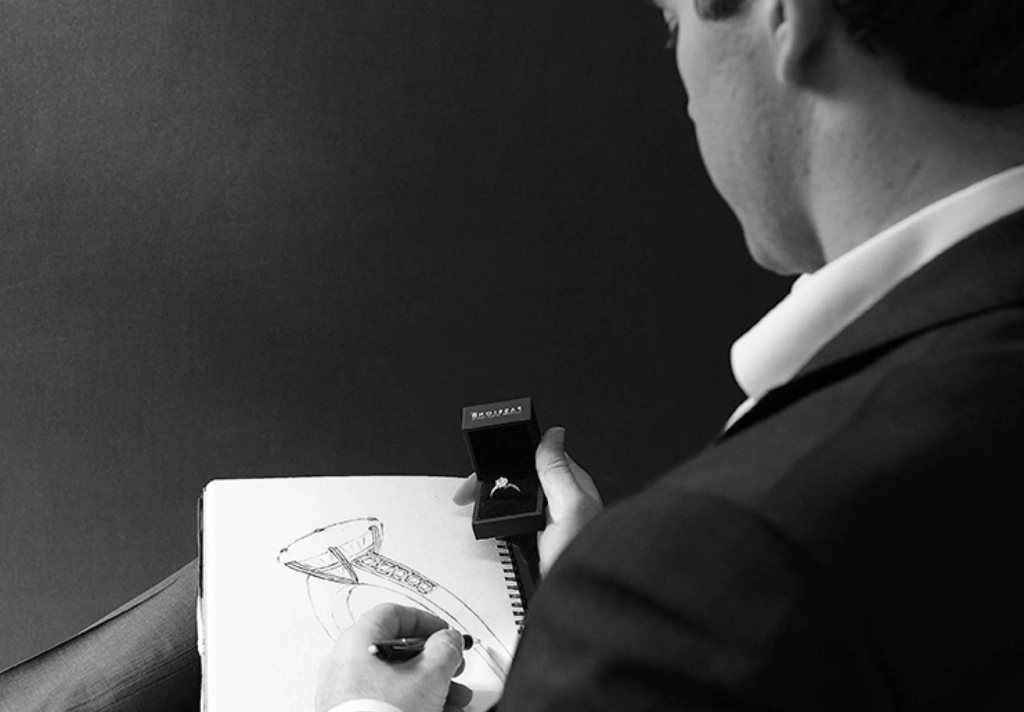
The custom design process at Xennox begins with your ideas — images, descriptions, references, preferences — and moves through sketches, CAD renderings, and material selection until you have a design that is genuinely yours. No element is fixed until you want it to be. The only design constraints are structural: what the setting requires to hold the stone securely and what the metal can support. Within those limits, the possibilities are broader than most clients initially imagine.
Matching Wedding Bands
An engagement ring is rarely worn alone for long. From the moment of the proposal until the wedding day, and for the rest of the marriage after it, the engagement ring and wedding band sit side by side on the same finger — and how they relate to each other visually matters.
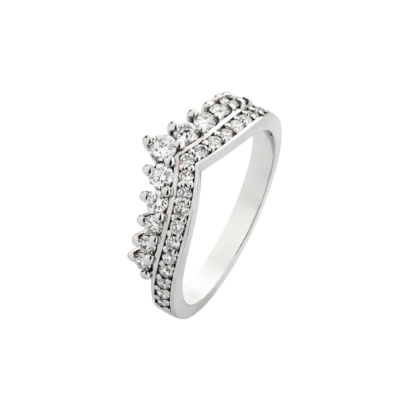
The most straightforward approach is a fitted band: a wedding band contoured to follow the exact profile of the engagement ring's shank, sitting flush against it with no gap. This is the cleanest solution, particularly for rings with shaped, tapered, or pavé-set bands where a straight band would leave an awkward space. We make fitted bands as a standard part of our service, and they are always the safest option for maintaining the appearance of the engagement ring.
A matching or complementary straight band works well with solitaires on straight or lightly tapered shanks. The visual relationship between a fine straight band and a classic solitaire is uncomplicated and timeless.
For clients who want the wedding band to make its own statement, a pavé-set or full-eternity band alongside a solitaire or simple halo creates a striking effect — the engagement ring provides the focal point, the band adds continuous brilliance. The key consideration here is that full-eternity rings cannot be resized, so sizing accuracy is especially important.
Metal consistency is not mandatory but generally advisable. A platinum engagement ring paired with a yellow gold wedding band creates a deliberate contrast that some clients love — it draws attention, and it reads as intentional. A platinum ring paired with white gold, however, will reveal a colour difference over time as the white gold's rhodium plating wears, which is worth knowing in advance.
We recommend thinking about the wedding band at the time of the engagement ring commission, even if the band itself won't be made until closer to the wedding. Designing both pieces in relation to each other from the start produces better results than trying to find or make a compatible band after the engagement ring is already complete.
Inspiration Gallery – Visit Our Brisbane Showroom
A page of descriptions and photographs is useful, but it is not the same as trying something on.
The Xennox Diamonds showroom in Brisbane's CBD carries our full collection of ready-to-wear designs across every style category — solitaires, halos, shoulder-set, vintage, coloured gemstone, and men's bands. We also have physical examples of past custom work and, for many styles, samples across multiple metal types so you can compare the effect of different choices directly.
Our designers are in the showroom to answer questions, make recommendations, and guide you through anything that isn't immediately clear. They won't pressure you and they won't steer you toward anything that doesn't fit. Their goal is to help you find or create the right ring — and they're very good at it.
We'd love you to come in and look. Walk-ins are welcome during business hours. If you'd prefer guaranteed time with a designer and access to our private consultation room, a VIP appointment takes a few minutes to book online and makes a real difference to the quality of the session.
Bring inspiration images if you have them. Wear rings you already own so we can understand the styles and proportions you're drawn to. Come alone, or bring your partner — whatever suits the situation. There is no wrong way to start.